
Pick a question. Test it.
Explore 13 interactive tools built by Aptifold. Change an input and see what happens.
Featured experiments
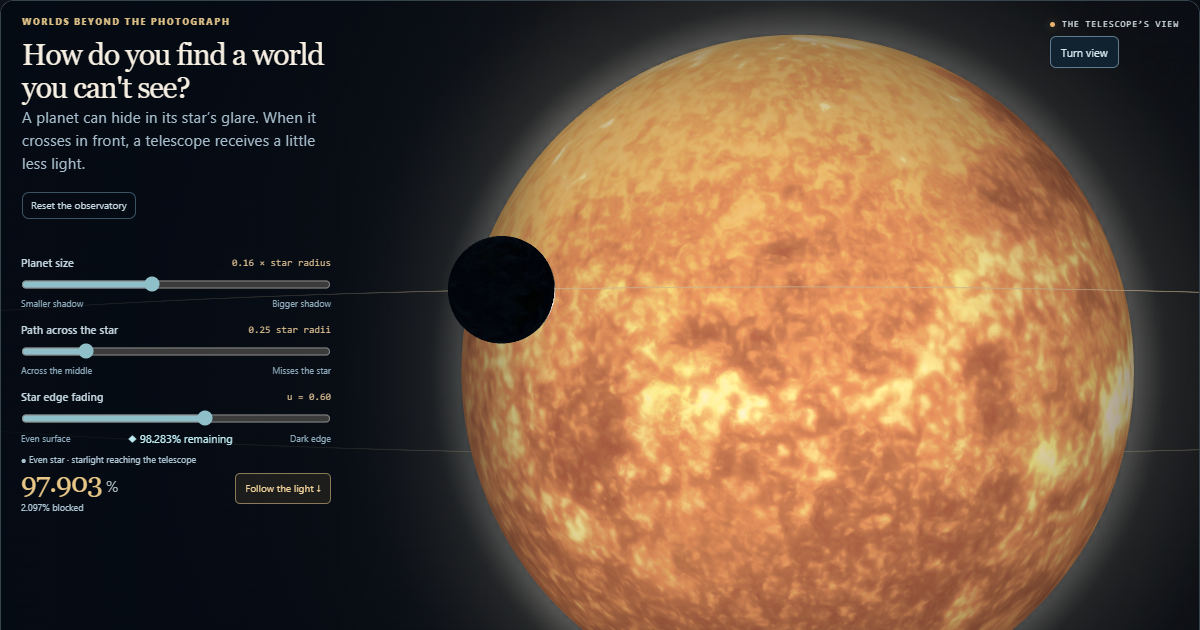
Shadow Observatory
Find a planet in starlight
Drag the dot on the light curve and watch the star dim as the planet passes.
Teaching model and real telescope readings
Try the light curveResilience Designer
Get eight crates in by noon
Try more road slots or a place for freight to wait.
Fictional delivery case
Compare plans
Sound Studio
Give one note a new sound
Add harmonics to change the tone while the pitch stays fixed.
Audio is optional
Mix a toneAll 13 modules
Find a module by name or question +
The Reading RoomSTATISTICS
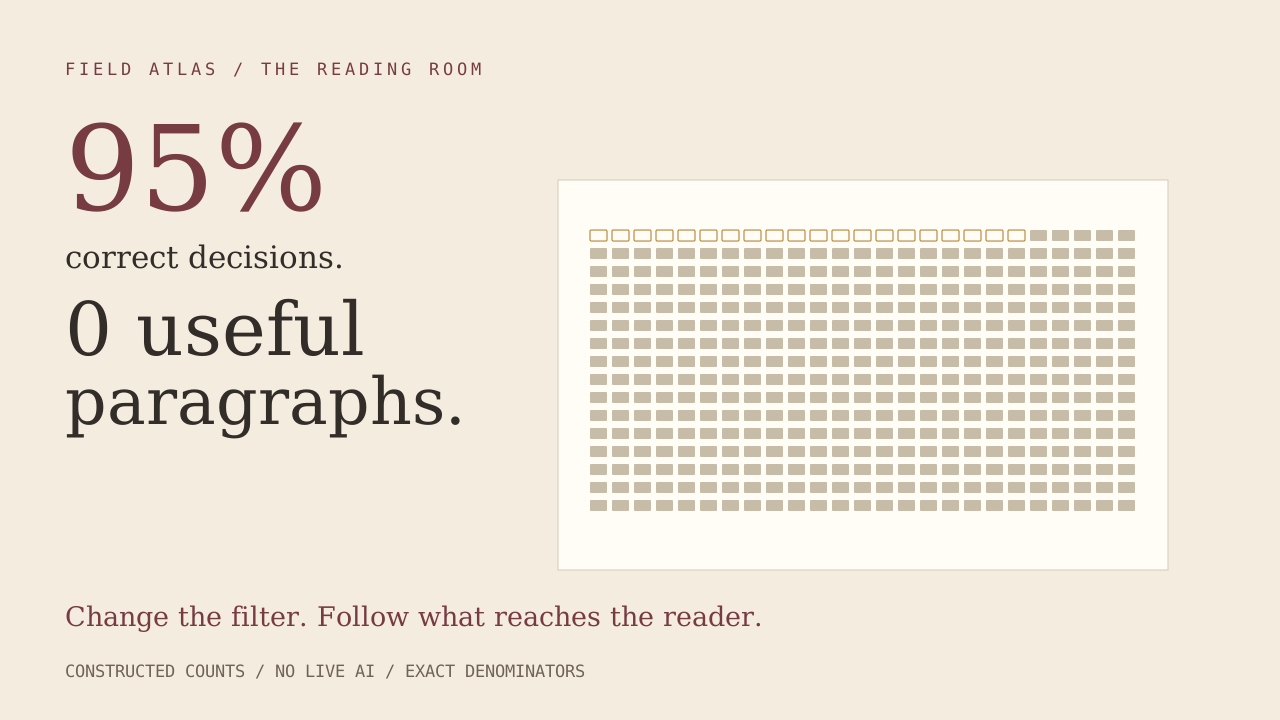
How can a 95% score miss everything you need?
Try the example filter, then set how many flagged paragraphs you can check. See how much useful text you could find before you stop.
About this experiment
A researcher needs melting temperatures from papers. A filter can skip every paragraph, score 95% correct and find none of them. Change the rules, inspect the reading pile and test what a deadline leaves unchecked.
A high score, an empty desk. Change the filter and follow what reaches the reader.
Constructed collections · Exact metric denominators · Reading-budget bounds
Kitchen LabEVERYDAY
How can the same oil have more surface?
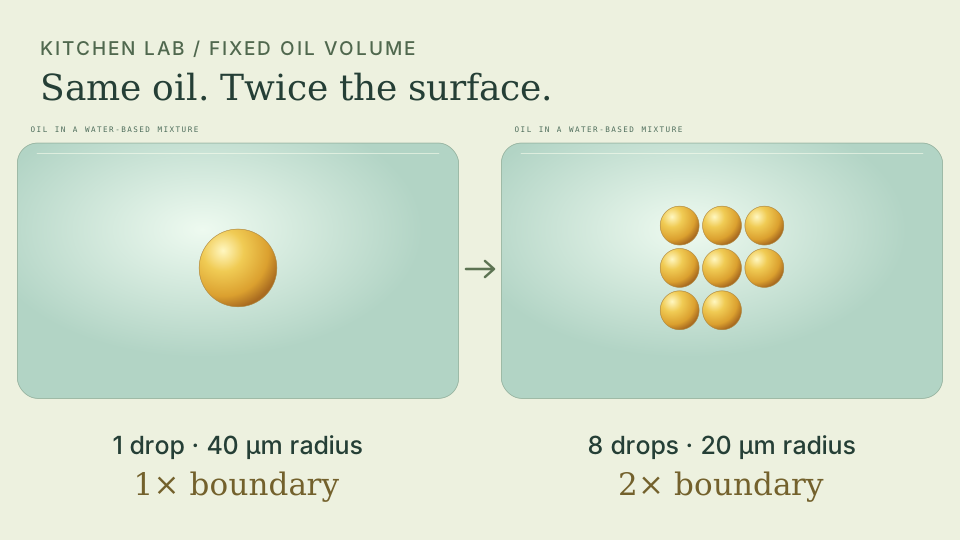
Split the drops, then tap one to inspect its boundary. The radius halves and total surface doubles while the oil volume stays fixed.
About this experiment
Whisking breaks oil into drops without dissolving it. Split a sphere into eight smaller ones and discover why the same oil needs more boundary. Then look at where an emulsifier can work.
Eight smaller drops, twice the boundary, the same oil.
Fixed-volume spheres · Enlarged boundary · Exact geometry, not a recipe
Animal BehaviourLIFE
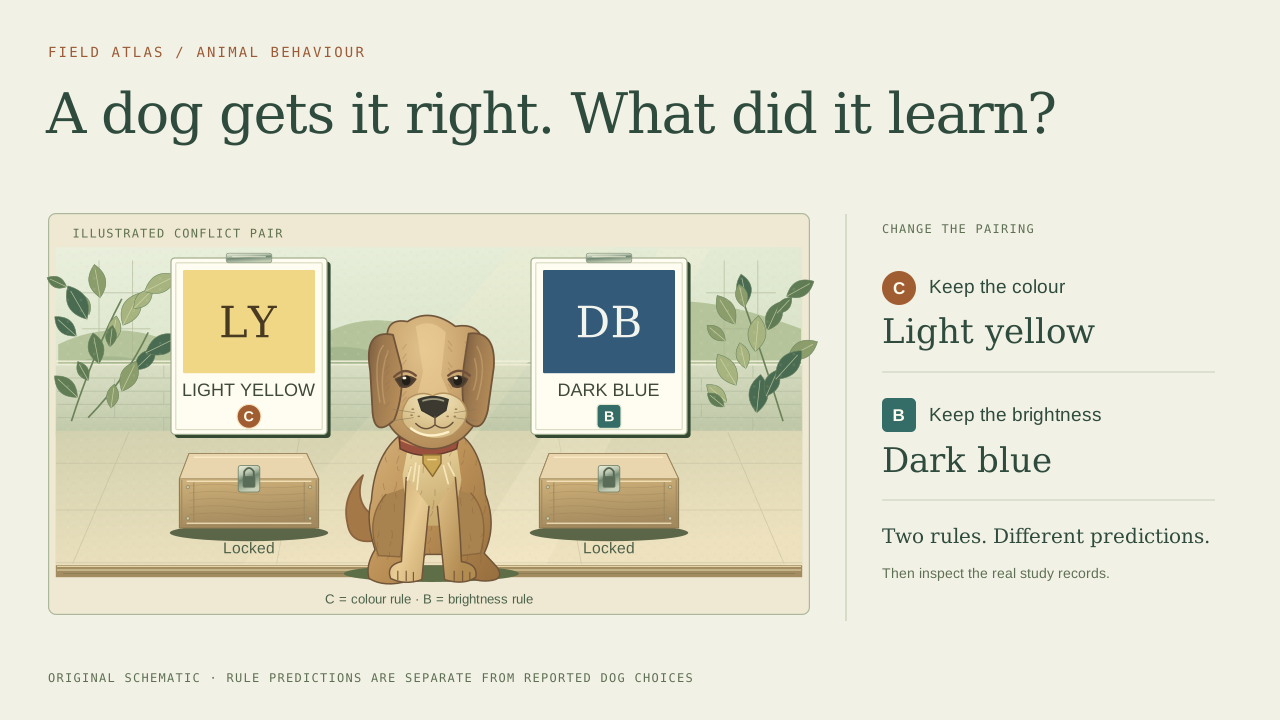
The dog gets it right. What did it learn?
Change the pairing. Compare the two rule predictions, exchange sides, then inspect the individual study records.
About this experiment
A dog can choose the right box using colour or brightness. Change the cards so those two rules disagree, then inspect what eight dogs actually chose in a published study.
Colour and brightness agree, until one careful change separates them.
Two rule predictions · One published study · Eight individual records
Sound StudioMUSIC
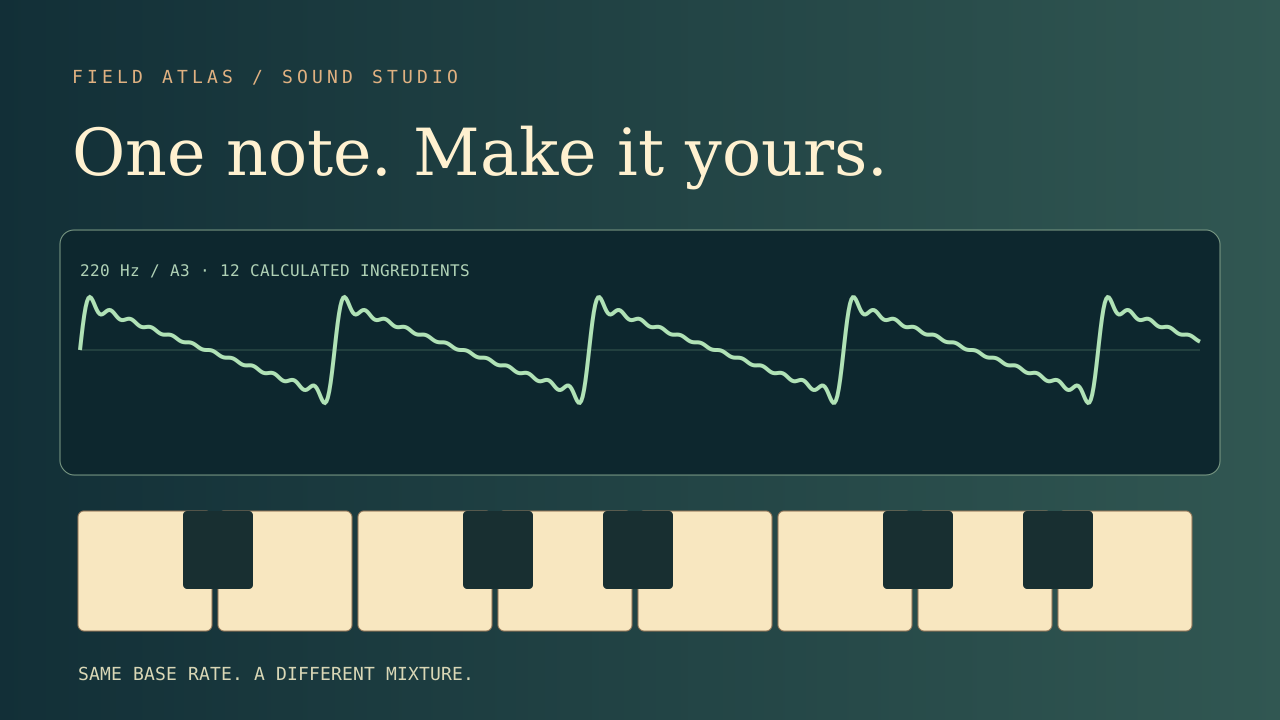
Can one note have two voices?
Add harmonics while keeping the base note fixed. Compare the drawing, try the optional sound, then change the entrance.
About this experiment
A flute and a violin can play the same note and sound different. Pull two clues apart: the vibrations in the mixture and the way the note begins. Then give the same melody two voices.
Change the ingredients. Shape the entrance. Give the same tune two voices.
Original synthetic tones · Playable octave · Editable eight-step melody
Plant ConservatoryBOTANY
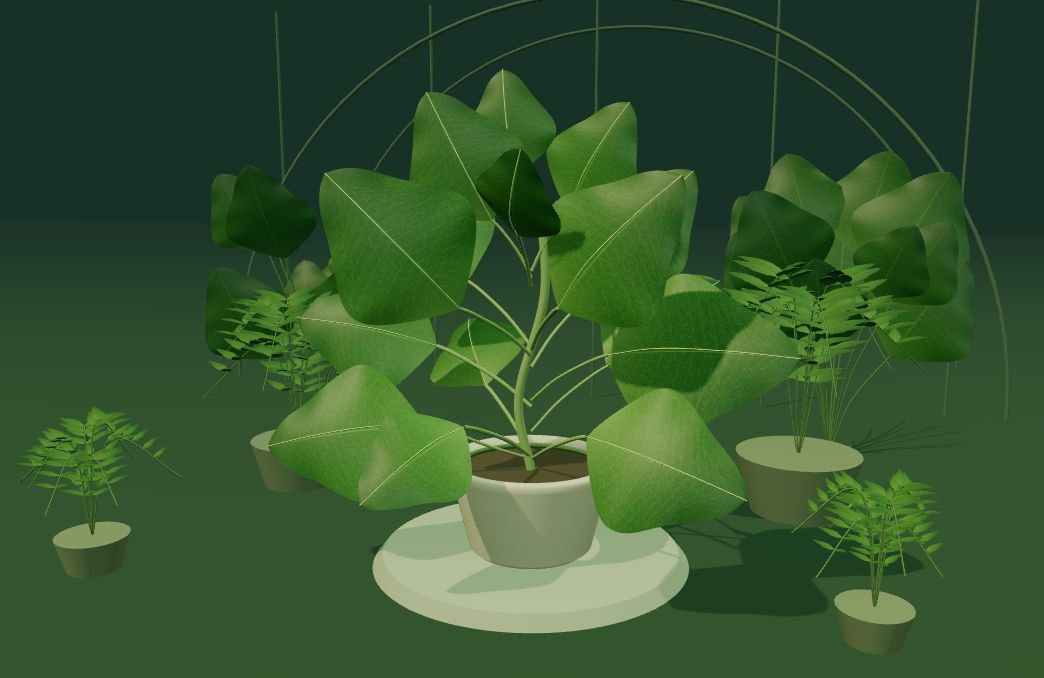
How does a plant feed itself?
Keep a setup as A, then open the leaf pores in B. Compare both carbon and water readings, and their light-response curves.
About this experiment
The carbon in a plant’s sugars comes from the air. Explore a lush plant, open its leaf pores and discover the water lost while CO₂ comes in. Then follow the root pathway and test why more light eventually helps less.
A preview of the native 3D conservatory. Open a leaf pore in the working module, then follow carbon in and water out.
Original 3D plant · Leaf and root views · Illustrative C₃ leaf model
Ocean NotebookEARTH
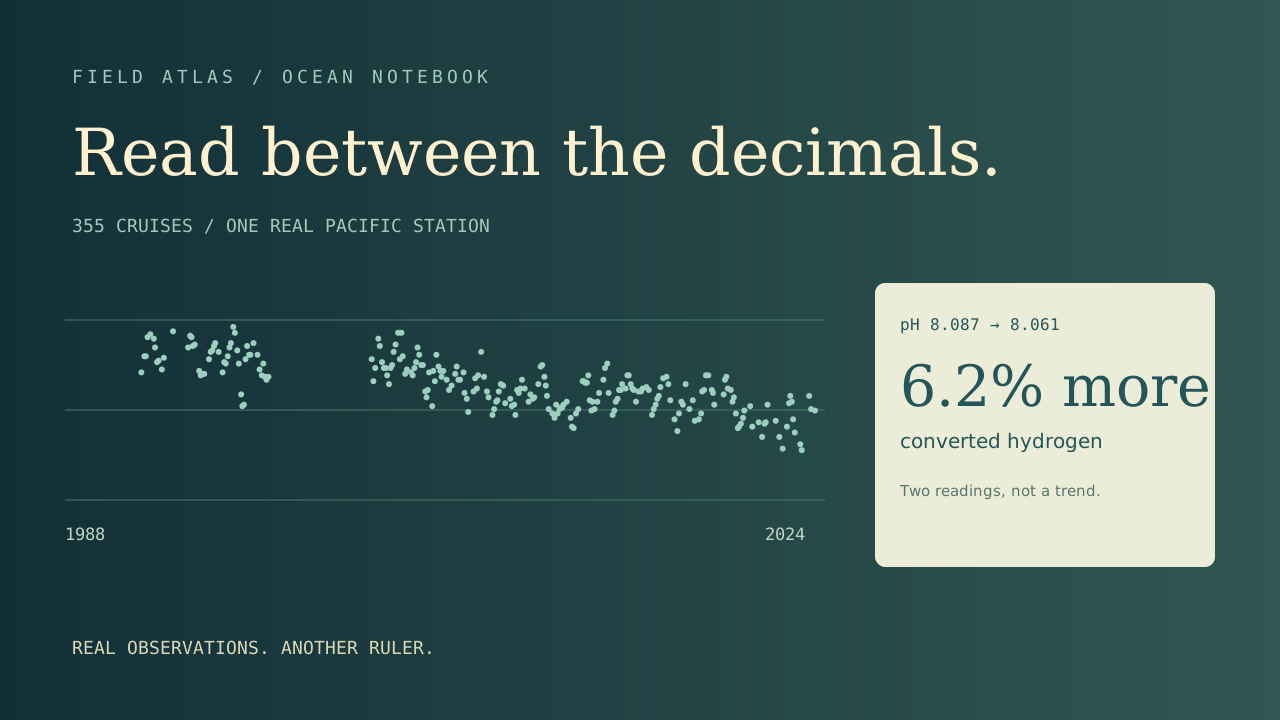
What does a small change in seawater pH mean?
Show what the pH gap means. Choose another cruise on the plot or sliders; test an equal pair and a missing reading.
About this experiment
Researchers keep returning to one patch of Pacific Ocean to sample its surface water. Compare two real cruise readings, reveal the ratio behind their pH decimals, then follow the chemistry to shell-building.
Two real readings, another ruler, and a chemical connection to shell-building.
355 real cruise records · Four source pH columns · Explicit logarithmic transform
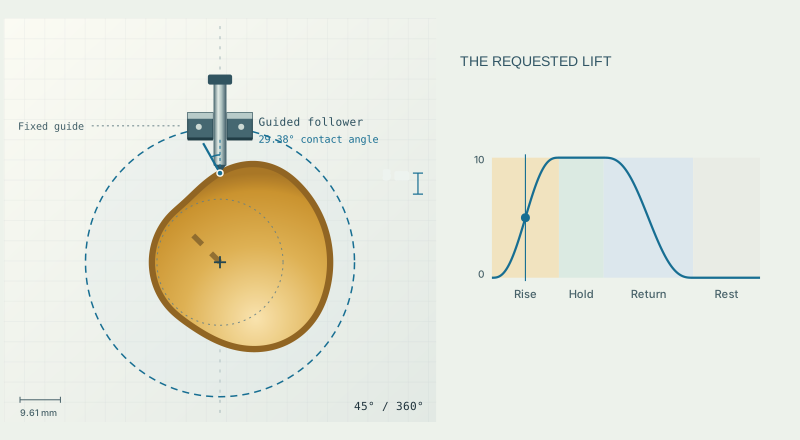
Movement FoundryDESIGN
What shape makes a part rise, pause and return?
Try a 25 mm radius limit. Drag the gold lift handle down to make the wheel fit, then turn it to inspect the movement.
About this experiment
A machine designer needs a part to rise, pause and return on every turn. A shaped wheel called a cam can produce that movement. Find out whether the required wheel fits the space available.
Keep one design, change another and compare both. Save their millimetre outlines and design briefs.
Point and roller constructions · Conceptual SVG outlines · Ideal contact geometry
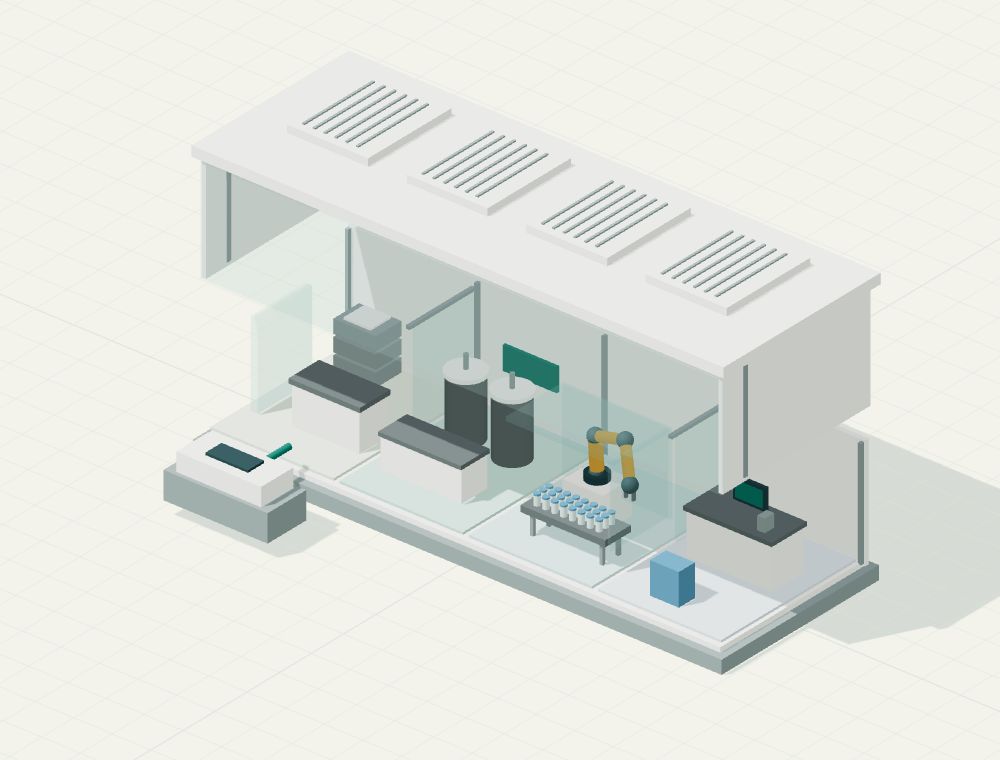
The Factory in the BoxSUPPLY
Can local production cover a medicine supply gap?
Fill the preview batch. Compare held and reviewed states, then follow that case through the full line and supply experiment.
About this experiment
A hospital needs medicine even when deliveries stop. Follow a fictional batch through filling and checks, then compare extra stock with a small local production unit. Find out what becomes available in time.
Illustrative production unit. Follow a batch, interrupt deliveries and count what arrives in time.
Three separate teaching models · 3D and flat views · Fictional supply inputs
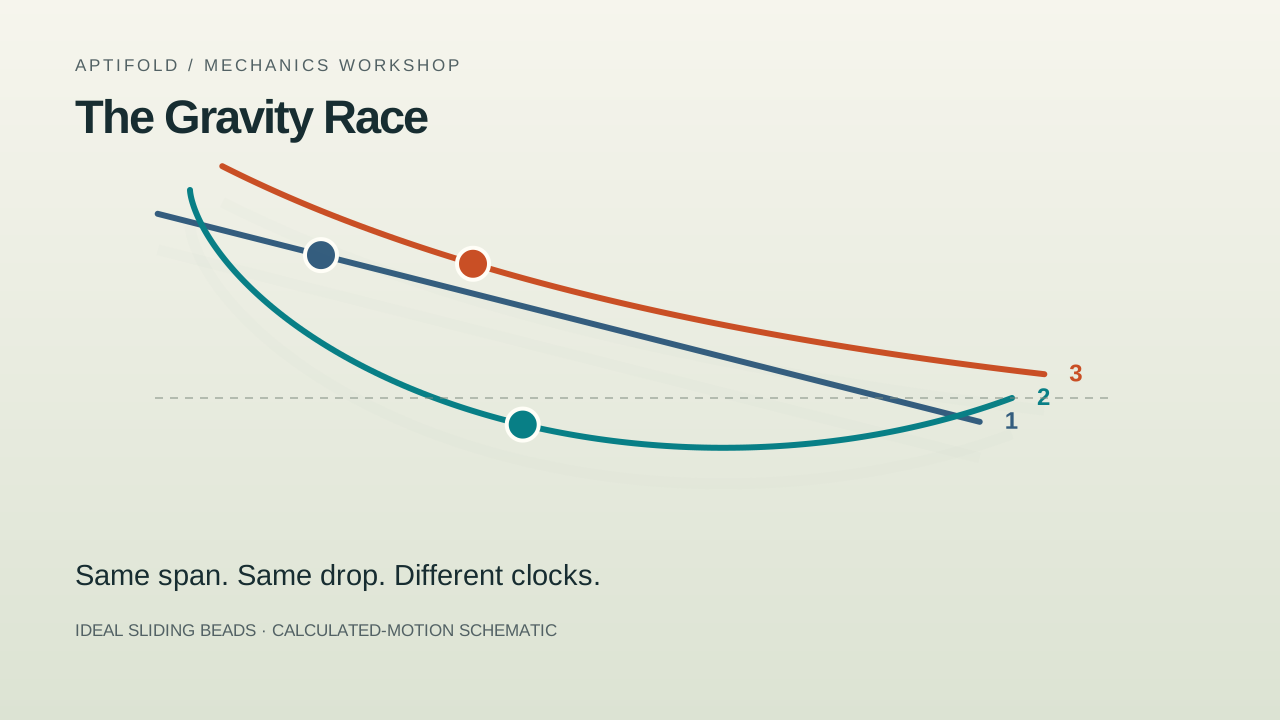
The Gravity RaceMECHANICS
Can a longer route get there first?
Reveal the three arrival times, then bend your wire and compare the new result.
About this experiment
The shortest route can lose. An early drop gives the bead speed sooner; the extra speed can make up for the longer wire.
Same starting height. Same finish. Different journeys.
Ideal sliding beads · 3D and flat views · Optional animation
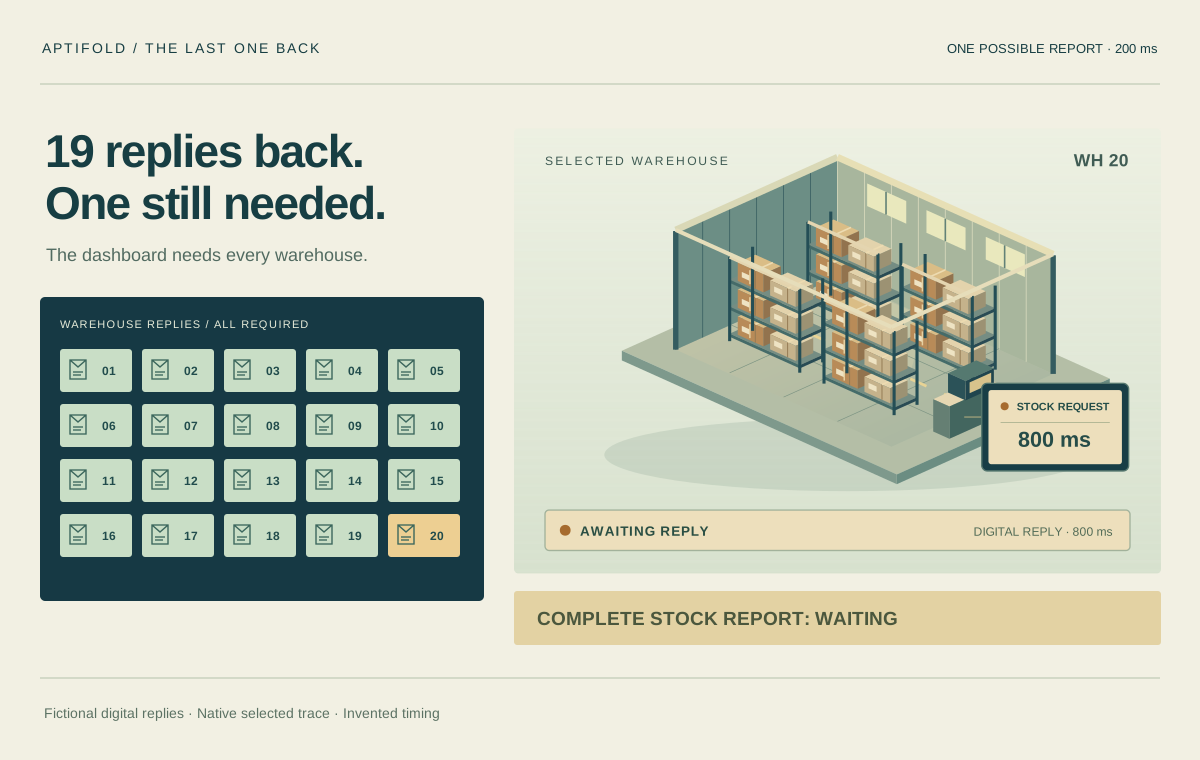
The Last One BackSYSTEMS
Why is the stock dashboard still waiting?
Check the 200 ms deadline. Select a warehouse to follow its reply, then choose a possible report on the count chart.
About this experiment
A stock dashboard asks many warehouses at once. If it needs every reply, one slow warehouse can keep the whole report waiting, even when each individual call is usually quick.
Follow one warehouse’s digital reply. Its delay can hold the complete stock report.
Fictional warehouse replies · Complete and partial reports · Explicit coverage limits
Shadow ObservatoryASTRONOMY
How do you find a world you can’t see?
Move the planet across the star. Follow the same moment on the light curve, then try real starlight.
About this experiment
An unseen planet can leave a measurable shadow. Follow how its path changes the starlight, then search real telescope readings for a repeating dip.
Move the shadow. Follow the light. Then investigate measured starlight.
3D teaching model · Linked light curves · 993 original telescope readings
The Missing SignalSENSING
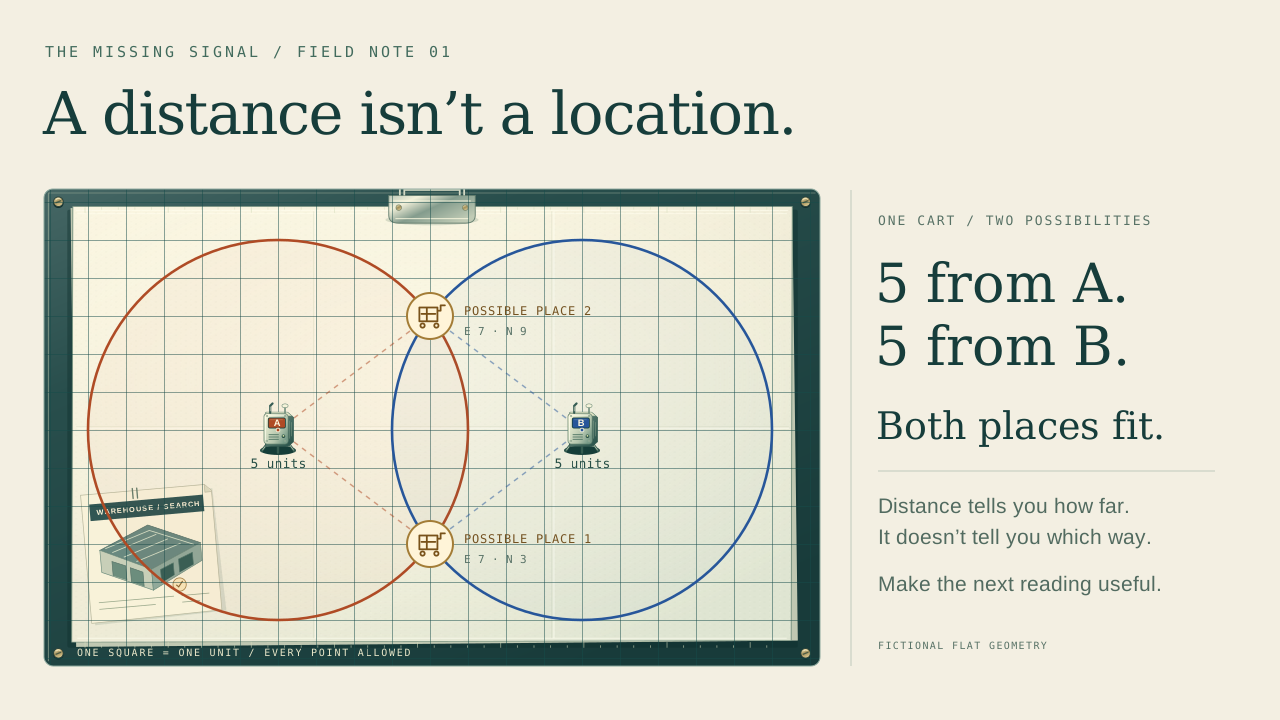
Can another reading find a missing cart?
Find both possible cart locations. Then move a third receiver in the linked investigation and test whether its next reading could tell them apart, even with some error.
About this experiment
A warehouse team is looking for one missing cart. A small device on the cart sends a radio signal. Listening devices, called receivers, report its distance, but two locations can fit. Find out where another receiver would help the team choose where to look.
One cart, two possible locations. Move a receiver to see what would settle the search.
Invented warehouse search · Exact geometry · Bounded errors on all three readings
Resilience DesignerPLANNING
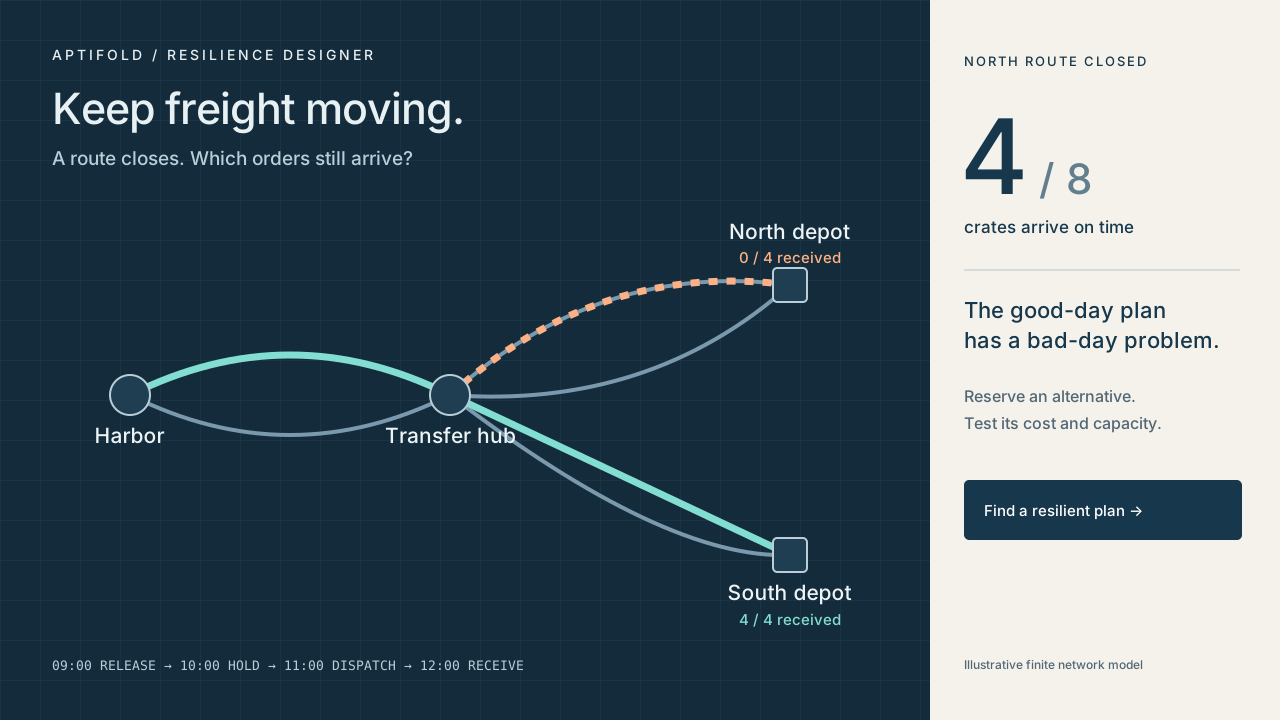
Which backup keeps the orders on time?
Close north, then find and apply a passing plan. Compare the extra reservation cost with the deliveries protected; Undo restores your earlier selection.
About this experiment
A dispatcher needs to keep deliveries on time when a route closes. Book transport capacity and storage, then test whether those bookings still get each depot its order when it can receive it.
Close a route. Repair the plan. See which extra reservations protect the deliveries.
Fictional finite network · Editable inputs · Local calculation